


-- Located at the foot of the Himalayas and on the banks of the Ganges River, Rishikesh has long been known as the "Yoga Capital of the World". The local yoga teacher training programs attract three groups of people: professionals planning to switch careers, enthusiasts looking to deepen their yoga practice, and ordinary travelers seeking life transformation. From 2026 to 2028, this sector will remain one of the most sought-after development paths in the global health industry.
This guide organizes all essential information that complete beginners need to know before signing up, covering four core modules: course expectations, costs, school selection, and methods to maximize value after arriving in the area.
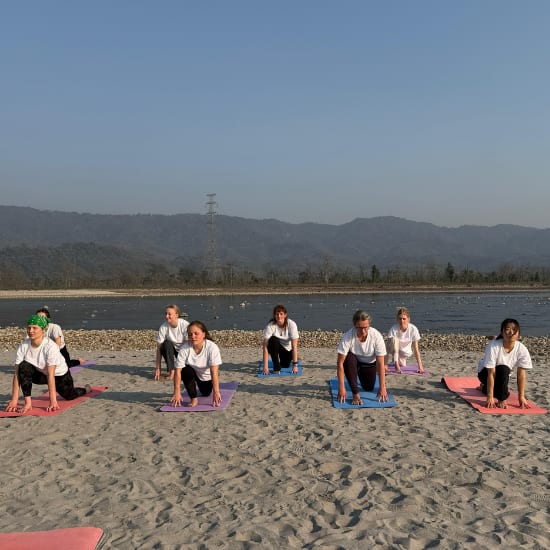
Yoga Group practicing yoga pose at ganga beach
Why Rishikesh Is the Right Place to Start
Rishikesh is not just a destination for a picturesque vacation. It has the lineage of teaching yoga in an unbroven culture for centuries with the holistic Ayurveda practices and other meditation arts. It has several reasons that make it beginner friendly:
Yogic Culture. The daily satsangs, ashram residing, and riverside meditation are not tour activities because they are the way of life here.
Authentic Teachers. There are teachers that all trace their lineage back to Indian yoga gurus.
Cost. Getting a full certification here is way less expensive than the other western training programs (USA, UK, Australia).
A built-in international community. You will be in classes with students from many different countries, so it does give a community feeling and not just a spiritual experience.
What Is Yoga Teacher Training (YTT), Exactly?
Best Yoga teacher training in India is a structured, high-intensity program designed to certify practitioners as qualified to teach yoga professionally. Most such programs hold Yoga Alliance certification; upon completing the course, trainees can obtain an internationally recognized qualification.
Training typically combines:
Asana (posture) practice and alignment
Pranayama (breathing techniques)
Meditation and mindfulness practices
Yoga philosophy and history
Anatomy and physiology relevant to yoga
Teaching methodology and practicum (practice teaching)
Choosing Between 200-Hour and 300-Hour Programs
The 200-hour YTT is designed for complete beginners and typically runs 3–4 weeks, with no prerequisites required (though some basic practice is recommended). It focuses on building foundational teaching skills, and graduates come away eligible to teach beginner and general-level classes.
The 300-hour YTT, by contrast, is built for certified teachers looking to deepen their practice. It usually spans 3–5 weeks and generally requires a 200-hour certificate as a prerequisite. The curriculum shifts toward advanced technique, therapeutic yoga, and subtle body work, and completing it—combined with a 200-hour certification—makes graduates eligible for RYT-500 status.
If you're new to yoga entirely, starting with a 200-hour program is the standard and recommended path. Many students later return for a 300-hour course once they've gained real teaching experience.
What Does Yoga Teacher Training in Rishikesh Cost?
Costs vary by school, season, and accommodation type. The following are general reference standards for the 2026–2028 period:
200 hour yoga teacher training in India program: Prices range from affordable shared accommodation packages to high-end private accommodation packages, and most programs include room and board;
300 hour yoga teacher training in India program: Due to longer class hours and more specialized teaching staff, its pricing is generally higher than that of the 200-hour course;
Expenses that require additional budget allocation: visa fees, international airfare, yoga mat and props (some schools will provide these), and personal spending on travel or Ayurvedic treatments;
Be sure to request a detailed cost breakdown from your intended school before registering. Reliable institutions will readily provide this information.
What a Typical Day Looks Like
While every school structures its schedule slightly differently, a typical day during yoga teacher training in Rishikesh generally follows a rhythm like this:
Early morning meditation — often before sunrise, along the Ganges or in a shala
Pranayama and asana practice — the main physical session of the day
Breakfast — typically Sattvic (pure, plant-based) meals
Philosophy or anatomy lecture
Rest or self-study period
Afternoon asana or alignment workshop
Teaching methodology practice
Evening meditation or satsang
Lights out early, in preparation for the next early morning
The pace is intentionally immersive. Most schools discourage leaving the ashram frequently during the course, since the structure itself is part of the training.
How to Choose the Right School
Not all yoga teacher training programs are created equal. Before enrolling, check for:
Yoga Alliance registration — confirms the school meets recognized curriculum standards
Instructor credentials and experience — look for teachers with verifiable training lineage
Class size — smaller cohorts generally mean more individual feedback
Reviews from past students — genuine testimonials on independent platforms carry more weight than site-only reviews
What's included — accommodation, meals, excursions, and study materials should be clearly listed
Post-certification support — some schools offer job placement guidance or alumni networks
Yoga Teacher Training in India: Rishikesh vs. Other Cities
While there are many places to practice yoga in India, such as Goa, Mysore, and Dharamshala, Rishikesh stands out as the best place for teacher training because of its spiritual yogic significance and the concentration of experienced teachers and ashrams available there. Rishikesh works best for beginners because of the structured, ashram-oriented programs on offer, compared to places like Goa, which lean toward a more relaxed, beach-town atmosphere. Because of Rishikesh's organization and immersive style of training, it is the best place for beginners to start their journey in the field.
Is Yoga Teacher Training Right for You?
You don't need to be flexible, advanced, or planning a career change to benefit from Yoga Teacher Training in India. Many students arrive as complete beginners seeking:
A structured way to deepen a home practice
A reset from burnout or a stressful career
A genuine cultural and spiritual immersion
The foundation to eventually teach, even informally
The training is demanding — early mornings, physical exertion, and long days — but it's designed to be accessible to sincere beginners, not just experienced practitioners.
Frequently Asked Questions
Do I need prior yoga experience to join a 200-hour YTT in Rishikesh? No. Most 200-hour programs are designed for beginners and will build your foundational practice from the ground up.
Is the certification recognized outside India? Yes, as long as the school is Yoga Alliance registered, your certification (RYT-200 or RYT-300) is recognized internationally.
What's the best time of year to do yoga teacher training in Rishikesh? Most schools run batches year-round, though October to April offers the most comfortable weather, avoiding the peak summer heat and monsoon season.
Can I teach yoga professionally right after a 200-hour course? Yes, a 200-hour certification qualifies you to teach general and beginner-level classes. Many teachers gain experience before pursuing a 300-hour certification.
What should I pack for yoga teacher training? Comfortable, breathable clothing, a journal, basic toiletries, and any personal medications. Most schools provide mats and props, but confirm this with your chosen school in advance.
Contact Info:
Name: Bipin
Email: Send Email
Organization: Yoga India Foundation
Address: Nirmal B Block, Pashulok
Phone: +919286778739
Website: https://yogaindiafoundation.com/
Release ID: 89200627

 Google
 RSS
RSS