


-- For many people, the word “peptide” now brings one subject to mind: weight loss. The success of GLP-1-based medicines and the attention surrounding newer metabolic compounds have pushed peptides into mainstream conversation.
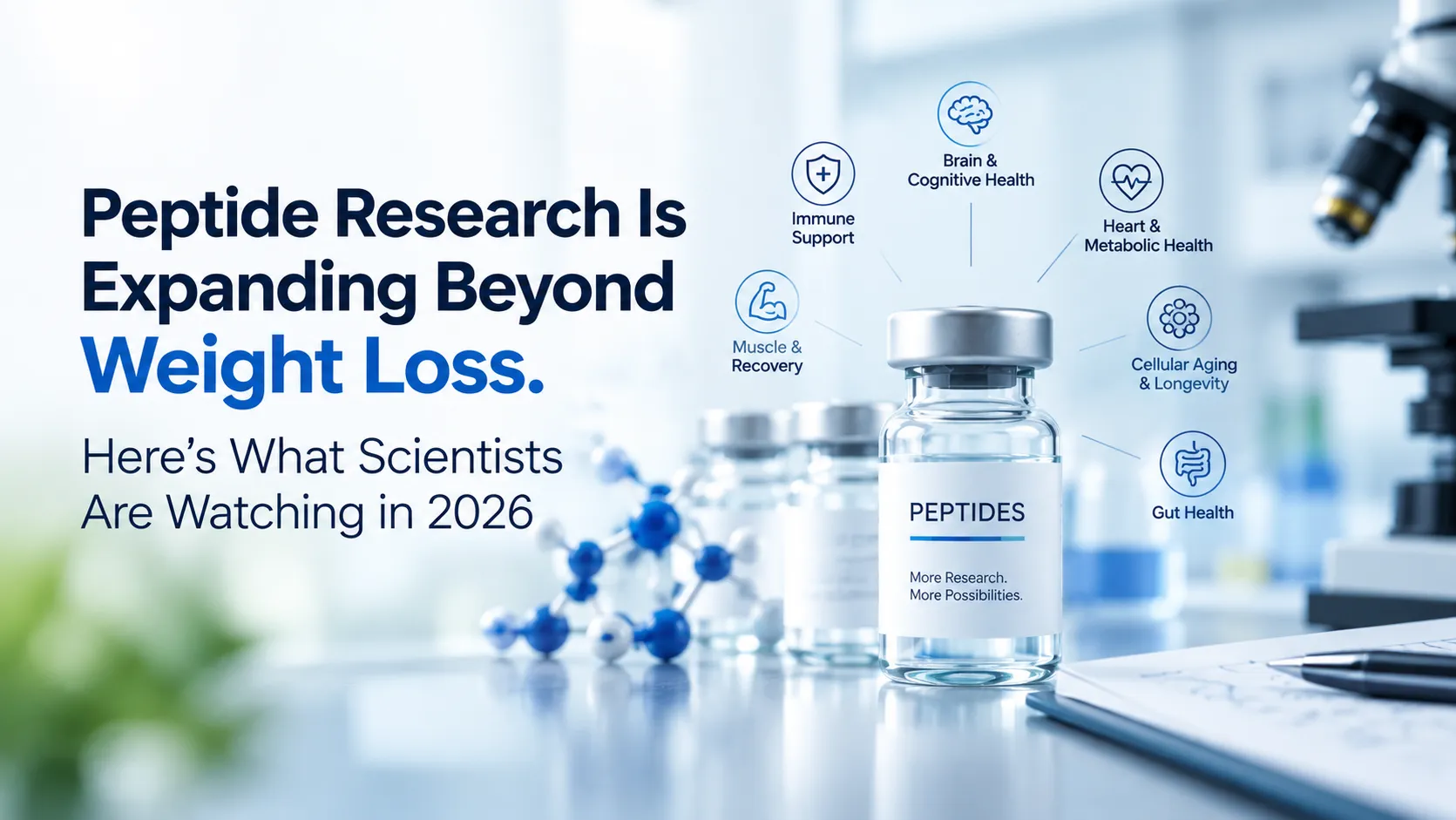
But weight management is only one part of a much larger research field.
Scientists are studying peptides as biological signals, experimental tools and possible starting points for future medicines. Research now ranges from metabolism and hormone signaling to antimicrobial compounds, tissue repair and neuroscience. As interest grows, so does the market for research peptides for sale, making it increasingly important to separate genuine research materials from the medical claims that often surround them online.
So where is peptide research actually heading in 2026?
Metabolic Research Is Still Moving Fast
Metabolic peptides remain the most visible part of the field.
The progression from single-target GLP-1 medicines to compounds that influence several hormone receptors has changed what researchers think may be possible. Semaglutide focuses on GLP-1 signaling, tirzepatide combines GIP and GLP-1 activity, while investigational compounds such as retatrutide add glucagon receptor activity as a third target.
That does not mean every new peptide will automatically outperform the previous generation. What interests researchers is the possibility of influencing several parts of metabolism at once, including appetite, glucose regulation and energy use.
The larger trend is therefore not simply toward “stronger” weight-loss drugs. It is toward more precise combinations of biological signals.
Researchers are now asking which pathways work well together, whether additional targets improve long-term outcomes and what trade-offs appear when a molecule becomes more complex.
Those questions will continue long after the current weight-loss headlines fade.
Peptides Are Also Being Studied as Antimicrobial Tools
Another area receiving growing attention is antimicrobial peptide research.
Many organisms naturally produce short peptide molecules as part of their defense against bacteria and other microbes. Scientists are studying how these molecules recognize microbial membranes and whether their structures can inspire new ways of approaching antimicrobial resistance.
This is particularly relevant as resistance to conventional antibiotics remains a global health challenge.
The research is not simply about finding a natural peptide and turning it directly into a medicine. Scientists often need to understand why a peptide works, how stable it is, whether it affects healthy cells and how its structure might be improved.
Artificial intelligence is also beginning to influence this work. Researchers are increasingly using computational tools to screen peptide sequences and predict which candidates may be worth testing in the laboratory.
That intersection between peptide science and AI could become one of the more interesting areas to watch over the next several years.
Beyond Metabolism: Repair, Signaling and the Brain
Peptides are useful research tools partly because the body already relies on them for communication.
Some act as hormones. Others help cells communicate locally or participate in immune responses, tissue signaling and neurological processes.
That has created research interest in areas ranging from wound and tissue biology to cognitive and neurological pathways. In these fields, peptides can help scientists explore what happens when a particular receptor or signaling pathway is activated or blocked.
It is important, however, to distinguish an interesting laboratory result from an established treatment.
A peptide may produce a useful effect in cultured cells or an animal model without ever becoming a medicine. The next steps can involve years of work examining toxicity, stability, manufacturing, dosage, clinical effectiveness and safety.
That gap between early research and an approved drug is one reason peptide headlines should be read carefully. A promising experiment is a starting point, not proof of a future therapy.
As Research Expands, Knowing What Is Being Studied Matters More
The growing number of peptide research areas has also created a much larger commercial research market.
That makes product identity increasingly important.
A name alone may not tell researchers everything they need to know. Related peptides can differ by a few building blocks, an added modification or the presence of more than one compound in a blend. Those differences can change how the material behaves in an experiment.
Generic Peptides combines a broad research catalog with educational material explaining peptide terminology, documentation and differences between related compounds. That type of information becomes more useful as the number of available research materials grows.
Researchers evaluating a material should be able to determine what compound is being supplied, find relevant batch information and understand what testing supports the stated identity or purity.
A percentage printed on a product page is less useful when there is no explanation of what was tested.
The distinction between research material and pharmaceutical medicine also matters. A peptide sold for laboratory research is not automatically equivalent to the material used in a clinical trial, even when the same compound name appears on both.
What to Watch Next
Peptide science in 2026 is broader than the current focus on weight-loss drugs might suggest.
Metabolic research will remain important, particularly as scientists explore multi-receptor compounds. At the same time, antimicrobial discovery, computational peptide design, tissue signaling and neuroscience are creating very different research questions.
The common theme is that peptides provide researchers with a way to study biological communication with unusual precision.
Some of today's experimental compounds may eventually contribute to new medicines. Many others will remain useful mainly as laboratory tools, helping scientists understand pathways that were previously difficult to study.
For readers following the field, that distinction may be the most important one to remember. The next major peptide breakthrough may eventually become a medicine — but it will begin as research long before it becomes a treatment.
Research-use note:
Research peptides discussed in this article are laboratory materials and should not be interpreted as approved medicines or products for human or veterinary use.
Contact Info:
Name: Victor Samuel
Email: Send Email
Organization: Generic Peptides
Address: Michigan, United States
Phone: +1 (313) 555-0147
Website: https://genericpeptides.com/
Release ID: 89205593

 Google
 RSS
RSS