


-- Over the past three decades of exploring reperfusion therapy for acute ischemic stroke (AIS), the treatment paradigm has shifted from a focus on large vessel recanalization to the protection of the microcirculation, yet the rate of functional independence among patients has still not reached an ideal level. A brand-new therapy for AIS—tissue kallikrein (TK) supplementation therapy—is attracting great attention from the international academic community for its unique clinical value.
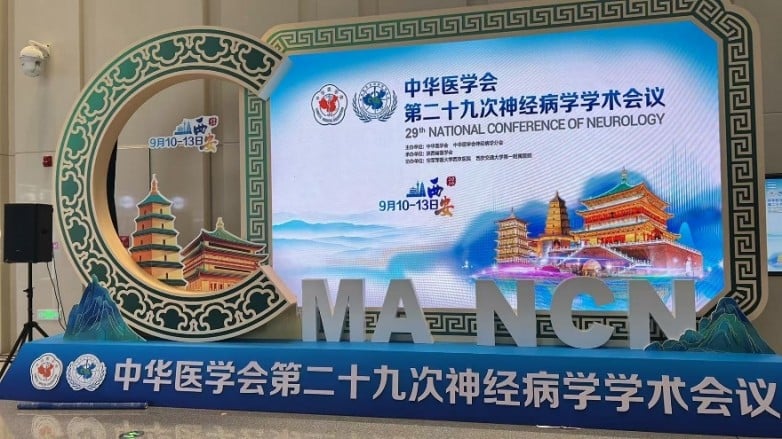
Recently, the 29th National Conference of Neurology of the Chinese Medical Association was convened in Xi'an, China. At the main venue of this conference, Prof. Zeng Jinsheng, Prof. Xu Yun, Prof. Cui Liying, Prof. Pu Chuanqiang, and Prof. Fan Yuhua served as the chairs of the TK special session, and Prof. Wang Yilong, Prof. Zhu Yicheng, Prof. Ding Jing, and Prof. Cheng Xin shared the latest advances in TK supplementation therapy from different perspectives and discussed its clinical value in depth.
From "Blood Flow Restoration" to "Functional Remodeling"—TK Opens the Door to Effective Perfusion
Large vessel recanalization does not necessarily mean effective tissue reperfusion, nor is it equivalent to functional recovery. Persistent constriction of precapillary arterioles after stroke can lead to microcirculatory impairment and impede functional recovery. Prof. Wang Yilong pointed out that TK supplementation therapy can promote the establishment of collateral circulation and angiogenesis, selectively dilate small arteries in the ischemic regions of the brain, enhance cerebral blood flow autoregulation and ischemic preconditioning on the affected side, comprehensively improve perfusion in the ischemic regions of the brain, and further increase cerebral reserve.
Animal studies have shown that administration of TK even 3 hours after cerebral ischemia retains neuroprotective effects, increasing vascular length and branching and reducing the number of perivascular microglia.1 The UNITE study (NCT06848894), an ongoing randomized, double‑blind, placebo‑controlled, parallel‑group, multicenter clinical trial, will further evaluate the efficacy and safety of TK in patients with AIS receiving reperfusion therapy.
Seeking Answers "From Within"—TK Supplementation Can Comprehensively Enhance Reparative Potential
Prof. Zhu Yicheng noted that TK is a key upstream enzyme in the kallikrein–kinin system (KKS) and exerts endothelial protective effects via B1 and B2 receptors. A 2025 special report published in Stroke clarified that TK supplementation therapy can precisely target the ischemic penumbra, improving collateral circulation and tissue perfusion2. Moreover, TK also has the potential to serve as a biomarker for stroke.
TK supplementation therapy is rapidly emerging as a major area of interest. Clinical experience accumulated through China’s real‑world strategies informs the dosing regimen, target patient population and treatment regimen in the development of DM199, making it a model in which a domestically developed innovator drug influences international development in reverse.
From Chinese Practice to the International Stage, TK's Evidence-Based Journey Has Yielded Fruitful Results
Prof. Ding Jing pointed out that multiple clinical studies have demonstrated that TK can improve neurological function and reduce the risk of stroke recurrence. The RESK study (Phase IV single‑arm trial) conducted in a Chinese patient population showed that at 90 days after TK treatment, the cumulative recurrence rate was only 2.50%3. A post-hoc analysis of the CASTOR study(propensity score‑matched analysis) published in Stroke showed that TK can significantly improve 3-month functional outcomes in patients with mild to moderate AIS4. Post‑hoc analyses of two large randomized controlled trials (RCTs) further revealed that TK combined with endovascular therapy markedly reduces the incidence of symptomatic intracranial hemorrhage5.Meanwhile, multiple high-quality randomized controlled trials (RCTs) on TK supplementation are ongoing. Recombinant TK agent DM199 has been presented twice at the International Stroke Conference (ISC), with its efficacy corroborated by clinical evidence from China’s treatment strategies.
TK Supplementation Addresses the "Recanalization Without Reperfusion" Dilemma in Reperfusion Therapy
Prof. Cheng Xin pointed out that current reperfusion therapy faces four major challenges: a limited population that can benefit, time-dependent attenuation of efficacy, futile recanalization, and reperfusion injury. At their root lie disturbances of the microcirculation, endothelial dysfunction, and thromboinflammation. Studies have found that endogenous TK deficiency is closely associated with an increased risk of AIS and poor reperfusion outcomes, providing a theoretical rationale for exogenous TK supplementation. With its four defining features—natural, precise, comprehensive, and harmonious—TK supplementation therapy aligns closely with the key elements of reperfusion therapy.
Conclusion
TK is an endogenous protective factor whose roles are being continually reappraised. Supplementation with TK can enhance ischemic compensation, unlock reparative potential, restore blood flow, and help patients achieve functional remodeling.
Reference:
1. Wen Dong. et al. Presentation Number: DP072, ISC 2026.
2. Kasner SE,et al. 2025 Mar;56(3):745-753.
3. Ni J, et al.CNS Neurosci Ther. 2021 Dec;27(12):1493-1503.
4. Huang D, et al. Stroke. 2026 Jan;57(1):63-76.
5. Wang M, et al. J Cereb Blood Flow Metab. 2024;0(0):1–12.
Contact Info:
Name: Yawen Guo
Email: Send Email
Organization: Kingyee (Beijing) Co., Ltd.
Phone: 15120030195
Website: https://www.medlive.cn/
Release ID: 89205659

 Google
 RSS
RSS