


-- Rock Solid Launches County-Specific Septic Maintenance Guidance Across Upstate South Carolina
The new resource series explains why septic pumping schedules should reflect household use and local property conditions instead of relying on one interval for every home.
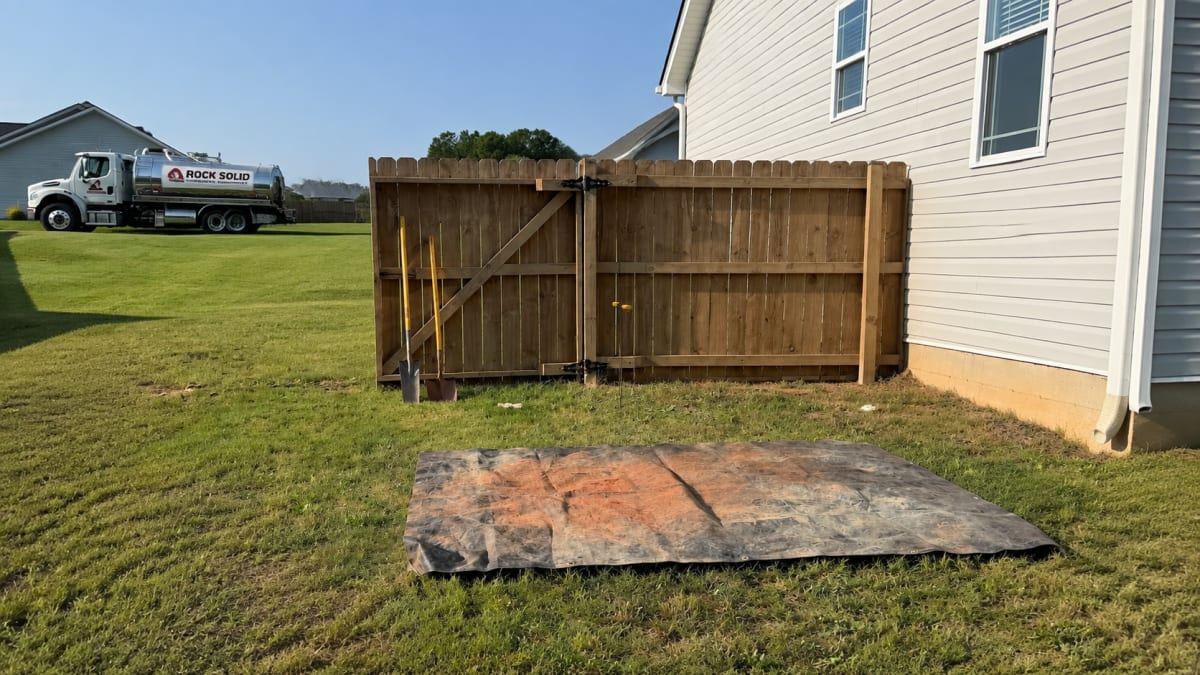
SPARTANBURG, S.C., August 25, 2026 — Rock Solid Septic & Excavation has published a series of county-specific septic maintenance guides for homeowners across Upstate South Carolina. The initial release covers Spartanburg, Greenville, and Cherokee counties, with each guide addressing the property conditions and household-use patterns the company regularly encounters in that area.
Most homeowners have heard that a septic tank should be pumped every three to five years. Rock Solid explains that this range is a useful starting point, but it cannot determine the right schedule for every property. Tank capacity and the number of people using the system can shorten or extend the interval. Inspection results provide the clearest answer when the system’s maintenance history is unknown. “The calendar gives a homeowner a place to start, but it does not know how many people are using the system or how much waste is actually in the tank,” said John (Ivan) Rusev, co-owner of Rock Solid Septic & Excavation. “We wanted to show what changes from one property to another so people can plan maintenance around the system they have instead of waiting for a backup.”
The Spartanburg County septic pumping guide focuses on tank capacity, household size, older systems, and Piedmont clay conditions. It also explains an important distinction for local homeowners: clay soil can affect drainage and make drainfield stress more visible, but it does not automatically cause solids to accumulate faster inside the tank.
Rock Solid’s Greenville County guide addresses suburban properties where household water use may place more demand on a septic system than homeowners expect. The guide examines how occupancy and everyday water use affect pumping decisions in Greenville, Greer, Simpsonville, Mauldin, and nearby communities.
The Cherokee County septic maintenance guide is written for rural properties around Gaffney and Blacksburg. Larger lots may have tanks located farther from the house, while older properties often have buried lids or incomplete records. Some rural systems also serve an additional residence or a shop bathroom that the current owner may not consider when estimating total use. “A rural property can look like a low-use home until we find out that another building is connected to the same tank,” Rusev said. “A larger tank does not automatically mean the owner can wait longer either. We look at who is actually using the system and measure what is inside before recommending the next service date.”
The guides distinguish preventive pumping from septic troubleshooting. Pumping removes accumulated solids and allows the empty tank to be inspected, but it does not repair a damaged component or restore a failing drainfield. Repeated backups or wastewater surfacing in the yard may indicate a problem that requires diagnosis beyond a routine pump-out. Rock Solid also advises homeowners not to treat warning signs as a maintenance reminder. Slow drainage and sewage odors often appear after the system is already under stress. Scheduling service based on the property’s actual use gives the contractor an opportunity to identify developing issues before they become emergency repairs.
“If we open a tank and find a problem, we explain what we are seeing and what needs to be fixed,” Rusev said. “Then the homeowner decides how to move forward. The point of these guides is to give people the same kind of straightforward information before they schedule service.”
The county-specific resources are based on Rock Solid’s field experience and current guidance from the South Carolina Department of Environmental Services. They are intended as planning tools rather than substitutes for an onsite inspection. The company measures sludge and scum levels during service to help determine whether pumping is needed and establish a more appropriate interval for the property.
Rock Solid serves homeowners and businesses throughout Spartanburg, Greenville, Cherokee, Pickens, and Anderson counties. Additional homeowner resources, pricing information, and completed project reports are available on the company’s septic education blog.
About Rock Solid Septic & Excavation
Rock Solid Septic & Excavation is a locally owned septic and excavation company based in Spartanburg, South Carolina. It serves homeowners and businesses within a 40-mile radius of Spartanburg and holds a 5.0 rating across 168 Google reviews. The company is known for transparent, published pricing and round-the-clock emergency response.
Media Contact
John (Ivan) Rusev, Co-owner
Rock Solid Septic & Excavation
Phone: (864) 431-2822
Email: [email protected]
Website:rocksolidexcavationsc.com
Contact Info:
Name: John (Ivan) Rusev
Email: Send Email
Organization: Rock Solid Septic & Excavation
Phone: (864) 431-2822
Website: https://rocksolidexcavationsc.com
Release ID: 89202072
 Google
 RSS
RSS