


-- FUJIFILM Corporation announces a 5 billion JPY investment into its Ashigara Site at the Kanagawa Factory in Japan to reinforce production facilities for instax™ films. In order to cater to the global demand increase for the instax™ series, Fujifilm working to expand the production capacity of instax™ film. The newly enhanced production facilities will begin operations in stages from spring 2026 and are expected to be fully operational by autumn 2026. When the new production lines go fully operational, instax™ films’ production capacity will increase by approx. 10% compared to FY2025.
Since its launch in 1998, instax™ has continued to evolve through product development that incorporates the latest trends and technologies. It becomes a global brand available in more than 100 countries worldwide. The instax™ series has expanded its lineup from analog instant cameras to hybrid instant cameras, smartphone printers, and a palm-sized camera. Furthermore, with the introduction of the event application “instax Biz™,” which enables shooting and printing with original design templates, the usage of instax™ products has extended to business applications.
To meet the growing global demand, we have been continuously investing in production facilities for instax™ film since 2022. Combining the investment of 2 billion yen announced in 2022, the 4.5 billion yen investment announced in 2023, and this latest investment, the cumulative investment instax™ film production facilities now totals around 11.5 billion yen. As a result, production capacity for instax™ film will increase by approx.50% compared to FY2022.
Fujifilm will continue to explore the limitless possibilities of photography, expand the world of instax™ instant photo system that allows people to enjoy on-the-spot photo printing.

About the Development Mechanism of instax™ Film

1. instax™ film incorporates the entire process of silver halide photography, from development to the completion of prints.
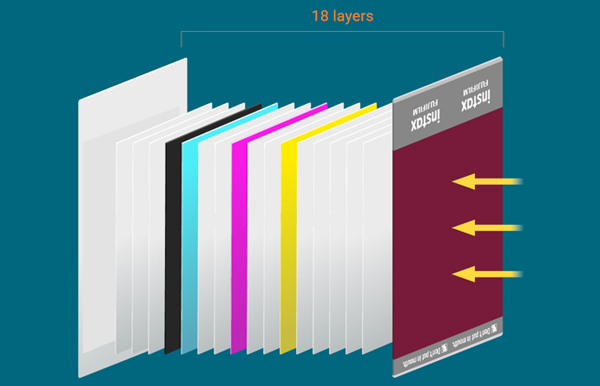
2. The film, only several tens of micrometers thick, contains 18 layers, including the photosensitive elements. Each layer reacts differently depending on the color of light passing through the camera lens, and these colors overlap to create an image.

3. When the film is ejected from the camera, a developer fluid pod breaks, spreading the fluid over the surface of the film to kickstart the chemical reaction needed to develop photos. A precisely-designed roller ensure the fluid is evenly distributed over the film.
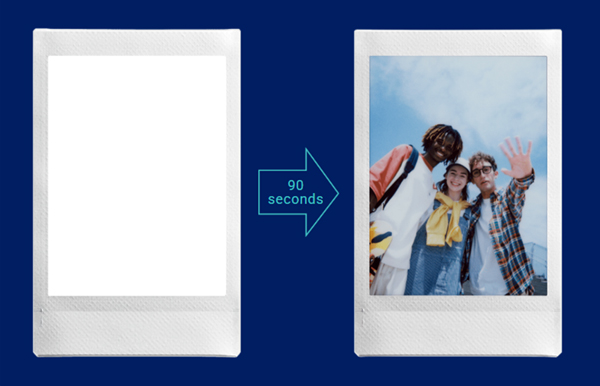
4. The frame at the top of the film absorbs excess developer fluid, while the photo continues to develop, gradually appearing over about 90 seconds.
- * instax and instax Biz are registered trademarks or trademarks of FUJIFILM Corporation.
Media Contact
FUJIFILM Holdings Corporation
Coprorate Communications Division, Public Relations Group
Release ID: 89179061

 Google
 RSS
RSS