


-- The NHS has made a commitment to reduce greenhouse gas emissions by 80% and to achieve a net-zero status by 2040. Through the Health and Care Act 2022, our beloved health service has become the first to bring in net-zero targets, and Heat Pump Manufacturers - Clade Engineering, are on a mission to play a significant role in our NHS’s decarbonisation efforts.
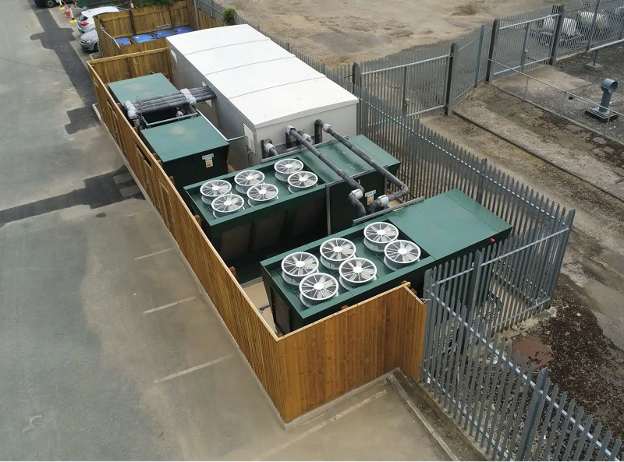
Heat pumps offer a sustainable solution to the heating and cooling of commercial buildings. They offer benefits such as:
● improved energy performance and eco-friendly credentials,
● reduced overheads,
● reliable heating and hot water,
● and cooling without the carbon.
Ground source heat pumps offer endless possibilities for NHS facilities looking to diversify.
So what steps is the NHS taking and already completed towards sustainability in a greener era with commercial heat pumps?
The role of commercial heat pumps in helping the NHS achieve its sustainability goals
Heat pumps significantly reduce the need for fossil fuels for heating and hot water. Heat pump technology is an efficient option, with no local carbon emissions and the potential to operate 400% better than traditional boilers, depending on the conditions.
Energy efficiency is the primary advantage of using commercial heat pumps in NHS hospitals - especially since over the winter period of 2022, hospitals suffered around a 200% increase in energy bills due to costs surges. Compared to conventional heating systems, heat pumps are more efficient energy-wise and thus can help cut down on energy bills for NHS hospitals in the long run.
NHS’s Adoption of Commercial Heat Pumps
There are examples of NHS facilities that have installed heat pumps.
● Gas-fired boilers at Grantham Hospital will be exchanged for air source heat pumps by United Lincolnshire Hospitals.
● Hospitals like Milton Keynes University Hospital have installed heat pumps.
● The Royal Wolverhampton NHS Trust is taking steps to upgrade Cannock Chase Hospital and New Cross Hospital. Both sites will have air source heat pumps set up.
Read about the Phase 2 Public Sector Decarbonisation Scheme bringing commercial heat pumps to NHS facilities.
The main benefits of using commercial heat pumps in these facilities include:
1. Lower Energy Bills
2. Improved Local Air Quality
3. Energy Security - Moving Away From Fossil Fuel Imports
4. Access to Flexibility Markets For Further Energy Cost Reductions
Clade Engineering are in the process of helping as many industries as possible across the UK, including helping the NHS reach their decarbonisation targets. They are able to manufacture and install a multi megawatt heat pump large enough to power a hospital - the type of refrigerant and heat pump used are really very site dependent. In the design stages, Clade work with the NHS to determine the best option - it could be water, ground or air source. For example, for some applications, CO2 is ideal as a refrigerant but for others, propane is better. These decisions need to be weighed against cost and other management factors in the early stages of design.
Heat Pump Installation: Procedures & Barriers for Hospitals
So… we all know the benefits heat pumps bring, but how are they installed in such large hospitals, and what heat pump would a hospital need?
Tim Rook - Chartered Engineer at Clade Engineering, explains the processes involved behind the NHS installing heat pumps:
"The NHS uses enormous quantities of heat and hot water to provide safe and effective healthcare for patients. Currently this is generated by the combustion of fossil fuels, a high cost and high carbon activity. Heat pumps are the only scalable, available and viable low carbon heat generation technology. In particular natural refrigerant heat pumps - r290 heat pumps and CO2 - offer a very low carbon sustainable heating option. CO2 heat pumps can generate very high temperatures suitable for hospitals where cleanliness and hygiene are of vital importance."
Hospitals are always running, every day of the year, nonstop. That’s a healthcare service that is always active. As a result, they require a bigger heat pump with a high output to stay as efficient as possible.
To decide what kind of heat pump is needed in a hospital, an engineer would first do a feasibility study that covers:
● Space,
● Noise,
● Power supply and,
● Suitability.
This will move forward in stages, up towards the start of operation. A process that carefully progresses from design to installation.
The foremost considerations that an engineer will cover during the feasibility study are:
- Where is the best set up point? Car parks or open spaces near the building or on the roof.
- Will there be proper air circulation for them to work properly?
- What adjustments to the heating system are likely necessary in order to boost its efficiency?
- An energy source is also necessary. Will this come from the nearest power outlet or sub-outlet area?
There are 4 main potential barriers to widespread adoption of commercial heat pumps in the NHS:
1. Significant investment in new infrastructure, equipment, and technology is necessary, presenting a major obstacle, especially for cash-strapped NHS trusts operating on tight budgets.
2. The transformation of energy generation and usage within the NHS requires substantial changes that can be technically intricate. It demands specialised expertise and may involve extensive retrofitting of existing infrastructure, leading to disruption and consuming valuable time.
3. Shifting the way NHS staff approach energy usage demands a change in thinking, which can be quite challenging. It necessitates altering work practices, routines, and habits, alongside providing education and training to help staff comprehend the advantages of decarbonisation and effectively implement it.
4. The lack of awareness and engagement is likely to be encountered. Some NHS staff may not be familiar with the benefits of decarbonisation or how to implement it in their respective organisations. Engaging staff and stakeholders in the decarbonisation process becomes crucial to support and ensure the success of decarbonisation initiatives.
Summary of the potential benefits of commercial heat pumps for the NHS
In some healthcare facilities, commercial heat pump technology has been put to effective use; resulting in an expected reduction of more than a third in carbon emissions. Compared to traditional heating systems, these are far more energy efficient, which helps to reduce energy costs for NHS hospitals.
Heat pumps can be utilised to reduce the need for fossil fuels in order to heat up and provide hot water. Heat pump technology is usually 400% more efficient than traditional boilers in the right environment, resulting in zero carbon emissions locally.
The use of commercial heat pumps is allowing the NHS to push forwards towards sustainability targets.
About the company: Clade Engineering delivers decarbonisation programmes to well-known businesses, improving heating and cooling systems using natural refrigerants, and leading strategy in the global energy transition towards a sustainable future. Clade supports customers seeking to future proof their business against the ever-increasing energy bill costs, and the implied risk of tax rises for carbon emitters.
Contact Info:
Name: Tim Rook
Email: Send Email
Organization: Clade Engineering
Website: https://clade-es.com/
Release ID: 89097841

 Google
 RSS
RSS