


--
Sending cryptocurrency to a friend can involve an unexpectedly complicated exchange: a wallet address copied into a message, a separate conversation about networks, and a final check before pressing send.
UPCX Wallet is approaching that process through something more familiar—a mobile number. Its app allows users to find registered, discoverable recipients through their phone number or UPCX ID and send crypto while retaining control of their own wallet keys.
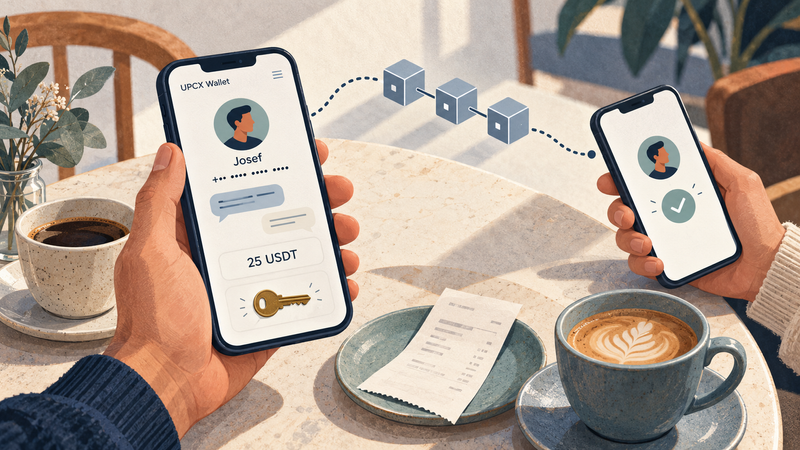
The feature brings together two experiences often treated separately in crypto: the convenience of a mobile payment app and the ownership model of a self-custody wallet. UPCX also places messaging and payments inside the same application.
For users, the practical difference is that a payment can start with finding a person rather than requesting a long blockchain address.
The phone number finds the wallet. The user controls the keys.
Behind the interface, the transaction still goes to a blockchain address. The mobile number acts as a way to locate the recipient’s linked wallet; it does not become the private key.
That distinction matters. A simpler payment interface does not require the wallet provider to take custody of the assets. Users remain responsible for securing their recovery phrase, and access to a phone number alone does not replace wallet recovery.
UPCX co-founder and CEO Makoto Nakano has previously described the company’s ambition as building “a truly practical blockchain payment network in terms of user convenience and scalability.” The mobile-number payment experience applies that usability ambition to an everyday task: sending money to someone already known to the sender.
What changes when two friends split a bill?
Consider an illustrative example involving two friends, Maya and Josef. Both have UPCX Wallet, and Josef has enabled discovery through his registered mobile number.
After dinner, Maya owes Josef 25 USDT. Instead of asking him to send a wallet address through another messaging app, she finds his profile and opens their conversation.
She taps Pay, enters the amount, reviews the recipient and transaction details, and authorizes the transfer. Once confirmed, the payment appears in the conversation.
This scenario illustrates the intended workflow; it is not a documented customer case study. Its significance is the removal of a separate address-sharing step, with the conversation and payment record kept together.
UPCX’s approach puts the emphasis on making self-custody easier to use in ordinary situations. Whether that translates into fewer payment mistakes will require evidence from real-world use. The immediate change is more tangible: users can begin a crypto transfer with a familiar contact, while keeping control of the wallet that sends it.
For product information and availability updates, visit upcx.io or follow @Upcxofficial on X
Contact Info:
Name: John
Email: Send Email
Organization: UPCX
Website: https://www.upcx.io/
Release ID: 89206757
 Google
 RSS
