


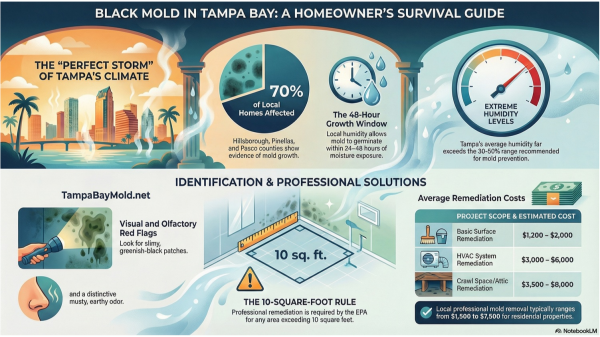
-- TampaBayMold.net has released an educational guide to help Tampa homeowners identify five frequently overlooked warning signs of black mold in their properties. The guide addresses a gap in homeowner awareness, as many residents fail to recognize early indicators of mold growth, which can lead to expensive remediation and potential health consequences. The resource provides practical identification strategies that enable homeowners to detect mold before infestations become severe, offering clear explanations of visual, olfactory, and environmental cues that signal the presence of toxic mold species.
More information is available at https://tampabaymold.net/services/mold-inspection/
Tampa Bay faces exceptional vulnerability to mold due to its climate conditions. Florida scores 38.76 out of 40 on the FDP national Mold Index, the highest rating in the nation according to case study data. Tampa Bay's average annual humidity is around 74%, and when indoor humidity exceeds 60%, mold spores can colonize any organic surface within 24 to 48 hours of moisture exposure. These environmental factors create persistent challenges for local homeowners, making early detection and intervention necessary to prevent widespread contamination.
The health and financial stakes associated with black mold exposure underscore the importance of timely identification. Black mold, specifically Stachybotrys chartarum, produces mycotoxins that are associated with symptoms such as chronic fatigue, persistent headaches, difficulty concentrating, and memory problems in exposed individuals, though the extent of direct causation at typical indoor exposure levels is a subject of ongoing scientific research. Mold-related insurance claims represent a significant financial burden for Florida homeowners, reflecting the widespread nature of the problem and the economic impact on residents who delay remediation.
TampaBayMold.net's guide highlights five key warning signs that homeowners frequently miss. A persistent musty odor is often the earliest indicator, which can signal hidden mold even before visible growth appears, as spores release gases similar to rotting wood or wet socks. Visual signs include dark spots or patches on walls, ceilings, and floors, while environmental cues such as excessive humidity or dampness indicate conditions favorable to mold colonization. The guide also directs homeowners to inspect areas under sinks, around windows, in basements, and within crawl spaces where moisture accumulates and ventilation remains poor.
Understanding when to transition from self-inspection to professional intervention is another focus of the resource. Florida Statute § 468.84 requires mold remediators and assessors to hold separate specialty licenses with the Department of Business and Professional Regulation, ensuring that remediation work meets regulatory standards. Professional mold remediation is recommended for areas larger than 10 square feet, as larger infestations require specialized equipment and containment protocols that exceed the capacity of typical household cleaning methods. The guide positions TampaBayMold.net as a resource that helps homeowners understand these thresholds and connect with licensed professionals when necessary.
The guide also provides actionable prevention strategies that homeowners can implement immediately. Controlling humidity with dehumidifiers and proper ventilation, fixing leaks and drying water-damaged areas within 24 to 48 hours, and maintaining regular inspections are all emphasized as foundational practices. Keeping indoor humidity below 50% reduces the likelihood of spore colonization, while routine checks of problem areas enable early detection before mold spreads. Tampa homeowners are encouraged to review the guide and request a professional quote if they suspect mold in their homes, ensuring that identification leads to timely and effective remediation.
For more details, visit https://www.tampabaymold.net
Contact Info:
Name: David Koerner
Email: Send Email
Organization: TampaBayMold.net
Address: 550 N. Reo St. Suite #300, Tampa , FL 33609, United States
Website: https://www.tampabaymold.net
Release ID: 89194053